



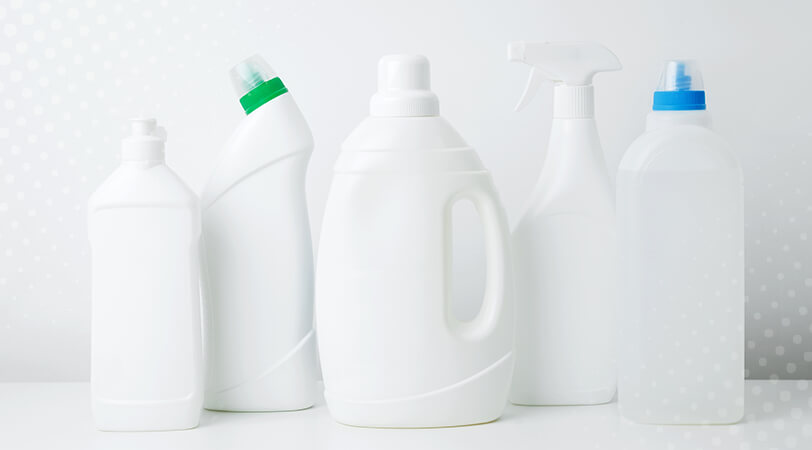
The right closure protects product integrity, ensures consumer safety, meets regulatory requirements, and reinforces brand identity. From prescription medications to household cleaners, every product category demands specific closure characteristics.
Success in closure selection requires understanding how neck finish specifications, material properties, and closure types work together. Whether you’re launching a new product or optimizing existing packaging, knowing how to choose plastic closure packaging helps procurement managers and packaging engineers select options that meet essential product requirements.
Understanding Neck Finish Compatibility
The neck finish determines which closure types will fit your container and how they’ll perform. Industry finish specifications established by The Plastics Industry Association and Glass Packaging Institute (GPI) provide standardized dimensions that manufacturers reference when designing both containers and closures.
Each neck finish includes a designation that identifies its key dimensions and thread style. A finish marked as 24-410, for example, indicates a 24mm finish diameter with a 410 style thread configuration. These specifications help closures and containers from different manufacturers work together seamlessly.
When evaluating neck finish compatibility, consider these factors:
- Thread Engagement: Continuous thread finishes provide secure closure, while lug finishes allow quarter-turn or half-turn application for faster packaging line speeds.
- Neck Height Dimension: Taller necks accommodate child-resistant mechanisms and tamper-evident bands, while shorter profiles suit standard screw caps and flip-top closures.
- Opening Size: The inner diameter affects dispensing characteristics and product flow, particularly important for viscous products or controlled-pour applications.
- Finish Style Availability: Common finishes like 20-410, 24-410, and 28-410 offer broad closure compatibility, while specialized finishes may limit your choices.
These bottle closure sizes and finish standards help with compatibility. Matching closure to finish type prevents cross-threading, ensures proper sealing, and maintains package integrity throughout distribution and consumer use.
How to Select the Right Closure Type for Packaging
The types of closures in packaging serve different needs based on product requirements. Understanding how to select a closure type for packaging requires evaluating your product category, dispensing requirements, and user expectations.
Cap or Lid — Standard Closures for Everyday Products
Screw caps accommodate a wide range of applications. These threaded closures work for everything from beverages to personal care products, providing reliable resealing and compatibility with standard bottle openings. Lined screw caps include sealing materials — foam, pulp, or induction seals — that help prevent leakage and maintain product freshness.
Snap-on lids allow easy application and removal without twisting, making them ideal for wide-mouth containers in food packaging and household products. These closures stay secure through a tight fit between the cap and container.
Flip-top closures combine convenience with controlled dispensing. The hinged design allows one-handed use, helping brands improve end-user usability while supporting clean, efficient product dispensing. These closures work well for condiments, personal care products, and cleaning solutions.
Specialized Closure Options
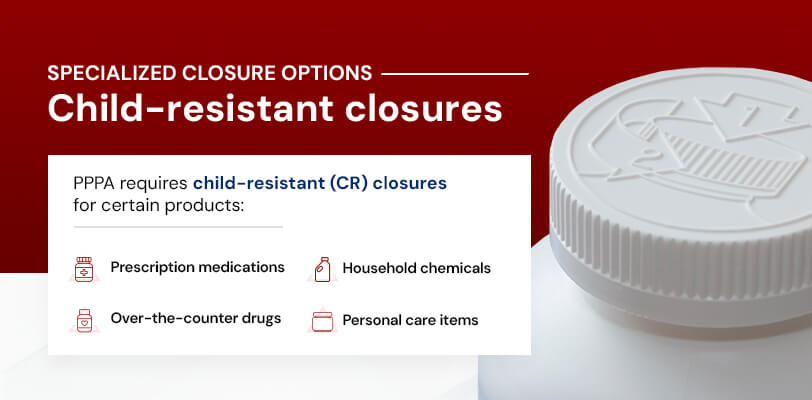
Child-resistant closures address safety requirements for hazardous products. The Poison Prevention Packaging Act (PPPA) requires child-resistant (CR) closures for certain products, including prescription medications, over-the-counter drugs, household chemicals, and specific personal care items.
Certified CR closures must meet performance specifications outlined in 16 CFR §1700.15. Under 16 CFR §1700.15, certified CR closures must demonstrate child-resistant effectiveness of at least 85% before an opening demonstration and at least 80% after demonstration, or at least 80% for unit packaging. They must also meet a senior-adult use effectiveness threshold of at least 90%.
Dispensing closures — including pumps, sprayers, and disc-top caps — deliver product precisely. Lotion pumps dispense controlled amounts, while trigger sprayers work for cleaning solutions and personal care items that need spray application. Disc-top closures flip open for easy one-handed dispensing, reducing waste and keeping products clean.
Tamper-evident closures show if a package has been opened through visible breakage features. These include induction seals that must be removed before first use, breakaway bands that separate when caps are opened, and shrink bands that show visible damage if tampered with.
The types of plastic closures for packaging range from simple screw caps to complex dispensing systems, each engineered to meet specific performance requirements and application needs.
Selecting Materials for Closures in Packaging
Closure materials affect functionality, compatibility, and sustainability. Consider these common closure materials and their distinct advantages:
- Polypropylene (PP): Provides excellent chemical resistance and performs well across a wide temperature range. This makes it suitable for products stored in varied conditions, supporting high-volume production with consistent quality.
- High-Density Polyethylene (HDPE): Offers good impact resistance and moisture barrier properties, often at a lower cost than PP. Its flexibility suits closures that require some give during application, though it offers less chemical resistance than PP in certain formulations.
- Recycling Compatibility: Improves when closure materials match container materials to streamline recycling processes.
Dispensing, Sealing, and Tamper Evidence
Beyond basic closure functionality, several performance features influence how well closures serve specific product needs:
- Barrier Properties: Lined closures with foam, pulp, or laminated liners create seals that block oxygen and moisture. Induction seals provide airtight sealing for products requiring maximum protection.
- Dispensing Control: Orifice reducers limit flow rate for products where overpouring causes waste or mess. Controlled-drop tips suit products where precise dosing matters.
- Regulatory Compliance: The Food and Drug Administration regulates food-contact substances and materials used in closures, with specific authorizations for intended uses. Products making performance claims — such as “airtight” or “leakproof” — should be supported by testing data.
- Application Compatibility: Closure design must work with your packaging equipment and production line speed. Some closures require specialized equipment or adjustments to existing systems, affecting both initial investment and operational efficiency.
- Production and Sourcing Requirements: Custom closure features can affect lead times, minimum order quantities, tooling needs, and testing requirements. Pairing these details with procurement and engineering teams early helps keep packaging projects on schedule and within budget.
Aligning closure design with equipment requirements helps businesses reduce downtime, maintain throughput, and avoid costly production adjustments.
Branding and Customization Options
Strategic closure design reinforces brand identity while maintaining functional performance:
- Color Matching: Custom color development extends brand palettes from primary packaging to closures, creating a cohesive visual presentation. This allows precise matching to specific brand standards, though minimum order quantities typically apply. Standard colors offer faster availability and lower minimums for smaller production runs.
- Surface Decoration: Pad printing applies logos and text to flat or curved surfaces, hot stamping creates metallic or matte effects, and in-mold labeling integrates graphics during closure molding. Debossing and embossing provide tactile brand elements that enhance perceived quality.
- Closure Shape and Style: Minimalist designs suggest premium simplicity, while textured grips emphasize functionality and ease of use. Unique shapes differentiate products on crowded shelves.
Partner With The Plastek Group for Custom Closure Solutions
Following a packaging closure selection guide provides the foundation for making informed decisions about your packaging needs. The Plastek Group, a world-class supplier, has been molding the future since 1956. As innovators in plastics, we engineer custom closures and offer an extensive range of standard options.
Our closure capabilities serve personal care products, health and beauty, home care, pharmaceutical and nutraceutical products, and food and beverage products. We offer comprehensive guidance on types of packaging closures and deliver technical support throughout the selection process.
When you’re ready to optimize your packaging, contact our team to discuss how our closure solutions can support your specific goals.