


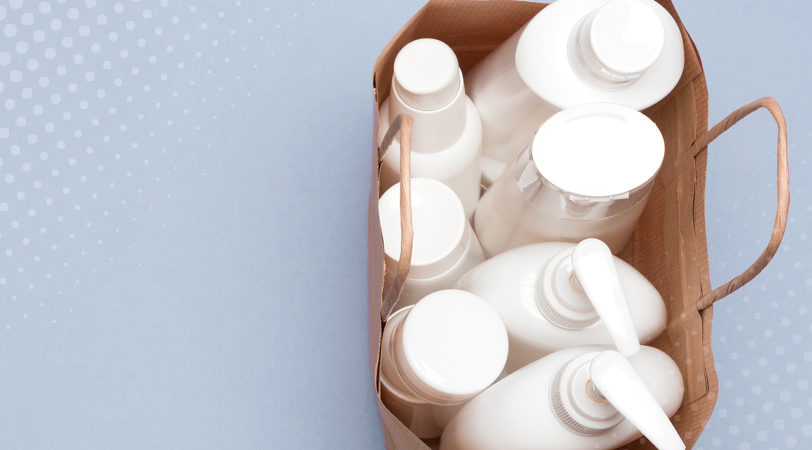
For home care brands, packaging plays a key role in how products are presented, protected, and differentiated in competitive retail environments. As a result, quality home care packaging can support brand recognition, shelf appeal, and buyer confidence before the product is used.
In this blog, we’ll break down the challenges of developing packaging for household cleaning products and outline some essential considerations to keep in mind when choosing packaging.
Challenges in Developing Packaging for Household Cleaning Products
The following are common challenges home care brands may face when turning packaging decisions into finished products:
- Balancing Sustainability With Formula Compatibility: It can be challenging to choose sustainable materials when a product formula requires specific levels of chemical resistance, barrier protection, or durability. When not chosen with care, some packaging materials may not perform well with certain ingredients, leading to discoloration, warping, leaks, or reduced shelf life. To properly balance both elements, brands must evaluate sustainability goals and material selection together.
- Closure Performance Consistency At Scale: It’s one thing to get a closure to function correctly in sampling and another to maintain the same torque consistency at scale. Several factors, including fill viscosity and temperature fluctuations, can affect closure performance. For this reason, you’ll need a packaging supplier with quality assurance processes to help reduce these risks of production inconsistencies.
- Regulatory and Labeling Compliance: Home care brands may need to include essential information, such as hazard pictograms, ingredient lists, and usage instructions. Fitting these requirements into an appealing design can be challenging, especially when available space is limited. To avoid costly redesigns and compliance issues, brands should plan for regulatory content during the initial packaging development stage.
Matching Your Packaging to Your Product
An important first step in choosing the right home care packaging is matching the container and closure to each specific product. Here are two essential elements to focus on.
Chemical Compatibility and Durability
Some home care formulas may contain surfactants, alkaline agents, and solvents that can degrade certain plastics over time if the wrong packaging is selected. This can lead to several costly issues in retail and e-commerce distribution, such as container deformation and leakage.
When evaluating packaging solutions, consider their chemical compatibility with your specific formulas. Rigid plastic materials, such as HDPE and PP, are both common choices for brands pursuing higher post-consumer resin (PCR) content. Their versatility and compatibility with a wide range of household cleaning formulas may explain their continued popularity in the market. Studies show that plastics dominated the home care packaging market share in 2025 with 62.35%.
Dispensing, Closures, and Consumer Usability
The packaging’s closure and dispensing system is also an important consideration when matching it to your product. For example, while high-viscosity products, such as fabric softeners, may need dosing mechanisms, concentrated cleaners may need child-resistant closures.
Your packaging should also support clear, reliable product use while helping reduce issues that could affect customer satisfaction and repeat purchases.
Meeting Market Demands
The right home care packaging combines product compatibility with sustainability and shelf differentiation.
Sustainability
In today’s market, sustainability has become an increasingly important consideration for home care brands looking to strengthen retail performance. According to a recent study, products with sustainability-related packaging claims averaged 28% cumulative growth over five years, compared with 20% for those without those claims. While packaging alone isn’t the sole determining factor in a product’s success, these figures suggest that sustainability can support stronger market differentiation.
To support your sustainability goals, consider materials with recycled content and recyclable design features.
Visual Design
Visual design can help home care brands strengthen shelf differentiation, support product usability, and align packaging with broader brand goals. A packaging supplier with custom product design and development capabilities can help you explore packaging options suited to your product and market performance goals.
Get Started With The Plastek Group
With so many materials, formats, closures, and customization available, it can feel overwhelming to choose the right household cleaning product packaging solutions. At The Plastek Group, we work with home care brands to evaluate packaging variables, align product requirements, and support the development process. Contact us today to discuss your needs, and we’ll work with you through key packaging development steps, including concept design and development.