


When weighing the strengths of your molding partner, a pivotal component of your evaluation process should always be based on your company’s goals and objectives for future health and well-being.
This guide provides valuable advice for choosing a new injection molding partner, from securing proper documentation to managing the physical transfer. With adequate preparation and a knowledgeable vendor at your side, it can be a controlled, low-risk transition that encourages growth.
Signs Your Current Mold Tooling Transfer Partnership Is Costing You
Supplier relationships rarely fail overnight. If you gradually fall out of alignment with your injection molding vendor, they’ll no longer function as an extension of your team. That’s the ideal time to revisit your arrangement and evaluate whether it still matches your growth goals.
Many manufacturers delay switching for fear it will be too disruptive. However, staying with a supplier who no longer suits you is an even greater risk to your business.
If you recognize these warning signs, act proactively before they escalate.
- Recurring flash or short shots
- Dimensional drift between production runs
- Inconsistent cycle times
- A lack of communication
- Material shortages with minimal notice
- Frequent missed or late delivery dates
- Limited ability to scale production
These patterns indicate a vendor that adds uncertainty instead of resolving it. They often point to systemic issues like poor preventive maintenance, aging equipment or undocumented processing changes. When you spot the shift, you can plan a controlled transition that minimizes downtime.
In many cases, switching to a team of experienced molding specialists can be a valuable growth opportunity.
Benefits of Switching Injection Molding Partners
Transferring molding tooling to an experienced partner can enhance efficiency, reduce risk and provide long-term value. Reliable vendors will work closely with you to understand the nuances of your tooling and process requirements, ensuring a smooth transfer with consistent outcomes.
- Improved quality and consistency: Working with a new partner can offer enhanced process controls or more stringent quality systems.
- Additional technical expertise: Experienced injection molding companies may use more advanced techniques for process optimization.
- Enhanced capacity: Switching can unlock additional production capacity, enabling you to scale or adjust production more easily.
- Risk mitigation: Working with experienced molding partners can help to reduce downtime and material shortages.
- Stronger compliance: Many injection molders in the U.S. must follow strict regulatory guidelines. Look for a partner who can comply with these quality conventions.
How to Choose an Injection Molding Partner
Switching vendors in any area of your business can be a fresh start for your productivity. Look for these factors when evaluating potential new partners:
- Experience in your industry
- High production capacity and technical alignment
- Capacity to handle unique specs, high-volume production and larger shipments
Not every partner has experience in receiving transferred tooling. Partnering with a company that offers mold transfer services makes it more likely that your switch will be seamless from start to finish.
A Step-By-Step Process of Injection Mold Transfers
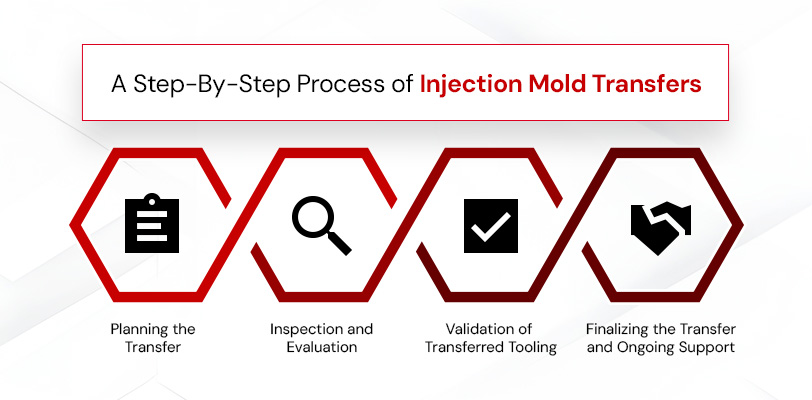
During the early stages of working with a new transfer molding tooling partner, focus on clarity and preparation, not on rushing the process. You’ll work with your new partner throughout this process to ensure a collaborative approach.
1. Planning the Transfer
A pre-transfer audit is your legal and technical safety net. Start by documenting tooling ownership to ensure a stress-free switch.
You’ll also need to:
- Review original tooling agreements and amendments
- Confirm ownership clauses and IP and transfer rights
- Clarify intellectual property protections
- Gather essential documentation, including quality history, maintenance logs and relevant tool warranties
- Conduct an exit inspection for current product quality
These steps prevent surprises by putting you and your new partner on the same page.
2. Inspection and Evaluation
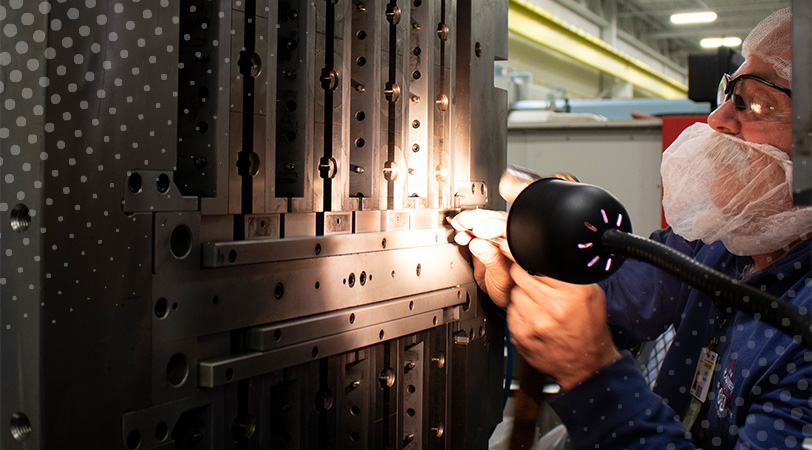
Once the tooling arrives at its destination, your new vendor should always look for hidden wear or alignment issues, determine whether preventive maintenance is needed, and fix anything that is faulty. Many injection molding partners have in-house toolrooms, enabling speedy, legally compliant repairs.
Addressing these issues reduces the risk of unplanned downtime and ensures the mold is ready for production. Coordinate with your partner during this stage to manage supply overlap and timing, maintaining production continuity during mold transfer and validation.
3. Validation of Transferred Tooling
Your partner must always validate the process to complete the transfer. In regulated sectors such as medical and fast-moving consumer goods, this is often mandatory. The vendor should check for installation qualification, operational qualification and performance qualification to ensure everything functions correctly and consistently meets requirements under real-world production conditions.
This stage is usually partner-led, but understanding the process helps your team confidently confirm results. Getting involved lets you spot areas for improvement.
4. Finalizing the Transfer and Ongoing Support
Completing the transfer means establishing clear procedures for ongoing maintenance and monitoring. Creating this framework now ensures both parties can work together as one cohesive team moving forward, positioning you for long-term success and keeping your operations running smoothly.
Move Your Mold and Improve Your Operations
Switching to a different injection molding partner has many benefits, from enhanced operations to risk mitigation. It can also be an expansion opportunity.
Since our creation as a tool-making company in 1956, The Plastek Group has become a worldwide supplier, supporting manufacturers with expert mold transfer services and smart process optimization across diverse industries.
Upgrade to a reliable, expert injection molding partner by getting in touch with our team today. We’ll help you secure your supply chain and provide guidance throughout every stage of the injection mold transfer service, from audit and logistics to long-term support.