



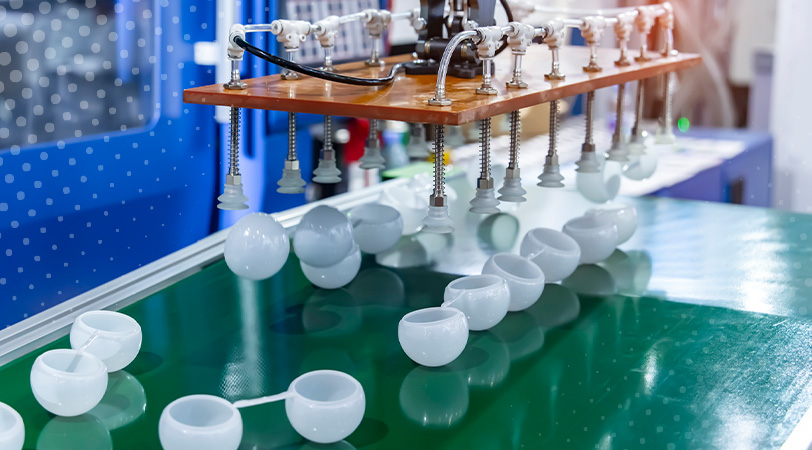
Plastic manufacturing is undergoing a fundamental shift. Over the past decade, and especially in the past five years, automation has moved from a competitive edge held by a few large processors to a foundational part of how the industry operates. Artificial intelligence-driven process control, robotics, real-time vision inspection, and integrated digital systems are reshaping how plastic parts are designed, molded, inspected, assembled, and delivered.
If you source rigid plastic packaging for your brand, automation in plastic manufacturing directly affects the consistency of your products on the shelf, the predictability of your supply chain, and the long-term cost structure of your packaging program. The shift is being driven by converging market forces, enabled by specific technologies across the manufacturing floor, and translating into measurable outcomes for the brands that depend on this industry every day.
What’s Driving Automation Adoption in Plastic Manufacturing
Automation itself isn’t new. Robotic part removal, conveyor-fed assembly, and basic process controls have been part of well-run plastic operations for decades. What’s changed is the convergence of three pressures that have pushed automation from a useful tool to a strategic necessity:
- Tightening Skilled Labor Markets: Manufacturing talent has been steadily harder to find for years. Automation has become a critical response to long-standing talent shortages, particularly for operations that depend on heavy manual handling, manual inspection, and shift-to-shift human variability.
- A Steep Drop In The Cost Of Data Infrastructure: Industrial sensors, cloud-based analytics, and machine learning tools that once required enterprise-level investment now sit within reach of midsized processors. That shift has put genuinely intelligent, cross-functional automation within the operational reach of more manufacturers than ever before.
- Rising Demand And Tighter Brand Expectations: Brands are launching more SKUs, faster, with stricter quality expectations, tighter regulatory documentation, and increasingly robust sustainability mandates. Adding data intelligence to production can cut costs and boost efficiency.
Key Automation Technologies in Modern Plastic Manufacturing
The most visible form of automation in injection molding is robotics. Robotic arms handle part removal, sorting, stacking, and handoff to downstream operations. But that’s just the surface layer. The more transformative changes are happening in places a plant tour wouldn’t reveal.
AI-Driven Process Control in Injection Molding
Modern injection molding machines carry sensors that monitor pressure, melt temperature, cycle time, and material flow in real time. Machine learning models continuously analyze that data and automatically adjust process parameters to keep every shot within tolerance. This is the heart of automated injection molding processes today — not robots replacing operators, but intelligent software replacing guesswork.
Automated Vision and Inspection Systems
AI-powered cameras inspect every part as it comes off the line, checking dimensions, surface finish, and visual consistency at speeds no human inspector could match. As detailed in recent industry reporting on AI-supported inspection, the systems flag, sort, and document defects automatically. The result is a traceable, data-backed quality record that follows each part through the supply chain.
Predictive Maintenance for Tooling and Machinery
Sensors embedded in tooling and machinery monitor wear patterns and performance over time, predicting maintenance needs before a breakdown happens. For molds running continuous production cycles, this kind of foresight prevents unplanned downtime that quietly erodes lead-time reliability.
Integrated Assembly Automation
Many rigid plastic products ship as multi-component packages, including caps, closures, containers, tubes, jars, and the parts that connect them. Automated assembly cells handle pick-and-place, ultrasonic welding, leak testing, and packout, often connected directly to the molding line so there’s no break between production stages. Component interchangeability matters here — well-designed systems can flex across product variations without retooling the entire cell.
Blow Molding Automation
While injection molding gets most of the attention, blow molding automation has advanced in parallel. Automated parison control, in-line inspection, and integrated handling are driving similar gains in consistency and throughput.
The common thread across all of these technologies is straightforward. Automation in advanced injection molding operations isn’t about replacing skilled people with machines. The technology empowers experienced operators with better instrumentation, richer data, and more reliable systems, enabling consistent, repeatable results at scale.
How Automation Benefits Brands Sourcing Plastic Packaging
The practical impact of these changes shows up in ways procurement and packaging teams feel directly.
- Verifiable Quality Over Assertions: When inspection systems check every part and log every process variable, suppliers can prove their commitment to quality with documented data. Consistency improves across long production runs because automation dramatically reduces the variability introduced by manual handling and shift transitions.
- More Predictable Lead Times And Resilient Delivery: Integrated injection molding automation solutions create repeatable, time-stable processes that are less vulnerable to labor availability, shift bottlenecks, or unplanned downtime. Even during workforce fluctuations, suppliers with deeply automated molding and assembly capabilities maintain consistent throughput. Supply chains built on those processes hold up better when something unexpected happens upstream or downstream.
- Long-Term Cost Stability Across Multiyear Contracts: Plastic injection molding automation reduces material waste, optimizes energy consumption, and lowers labor cost variability, which drives mid-contract price increases at less efficient suppliers. For brands managing multiyear packaging relationships, that translates into more predictable pricing and fewer mid-cycle surprises.
- Flexibility For Custom And Evolving Product Requirements: Custom designs, evolving geometries, seasonal product variations, and sustainability-driven redesigns move through robust automated workflows without the slowdowns that once accompanied frequent changeovers. Suppliers with comprehensive manufacturing capabilities enable brands that need to innovate quickly without being held back by the pace of their packaging partner.
Why a Manufacturer’s Foundation Matters as Much as Its Automation
As automation has become more common across the industry, a meaningful difference has emerged. Some manufacturers recently added automation to existing operations, while others built their engineering foundation for automation from the start.
A processor with deep roots in toolmaking — designing, building, and maintaining the molds, components, and cavity systems that production depends on — understands firsthand how tooling design, material behavior, and machine performance affect one another. When a partner offers in-house mold design and manufacturing, their automation isn’t a layer added on top of someone else’s equipment.
It’s an extension of decades of cross-functional process knowledge, which is why those operations tend to run more cohesively, troubleshoot faster, and adapt to custom requirements with less friction. When evaluating suppliers, ask about their tooling capabilities. Manufacturers with in-house mold design and manufacturing can iterate faster, optimize for automation more effectively, and troubleshoot production challenges with a depth of insight that contract molders relying on third-party tool shops simply can’t match.
Partner With Innovators in Plastic for the World’s Leading Brands
The Plastek Group’s toolmaking heritage gave us a ground-up understanding of plastic manufacturing long before automation became widespread. Today, that foundation supports the verifiable quality, predictable lead times, and adaptability that global brands in personal care products, health and beauty, home care, pharmaceutical and nutraceutical products, and food and beverage depend on every day.
Advanced automation is one of many value-added manufacturing capabilities we bring to those partnerships. If you’re thinking about how automation is shaping your packaging supply chain, contact Plastek to learn how our integrated approach to automated manufacturing can support the products on your shelves today and those you’ll launch tomorrow.