


For decades, plastic injection molding has been a popular global manufacturing process. With specialist equipment and the right plastic materials, manufacturers can produce parts affordably and efficiently. To get the most out of the process, businesses must understand how injection molding works and how they can get the best results possible.
What Is Plastic Injection Molding?
Plastic injection molding is used to mass-produce many types of products, from consumer products like toothbrushes and children’s toys to commercial products like electrical switch casings and medical syringes. Many businesses turn to plastic injection molding for its low costs and fast production times.
Aesthetics are also a priority. A high-quality plastic injection molding manufacturer creates consumer products that look as perfect as possible. Twist-up tubes, push-up tubes, and jar caps are functional and aesthetically pleasing.
What Is the Plastic Injection Molding Process?
The plastic injection molding process is relatively simple. However, there’s plenty of work that happens before parts can be reliably and accurately manufactured. To ensure the mold is perfect, it must be:
- Designed with the part’s intended use in mind.
- Protoyped so the design can be refined and perfected.
- Tested to ensure it reliably creates the desired part.
Once the mold has been completed, it can be used for plastic injection. The process for plastic injection molding is:
1. Melt the Plastic
First, the plastic is melted so that it can fill the mold. The process requires a thermoplastic so that it becomes malleable when heated, but hardens once it cools. Commonly used plastics include:
- Acrylonitrile butadiene styrene: Known for its toughness, typically used in protective headgear
- Nylon: Strong and heat-resistant, often used in gears and bearings
- Polycarbonates: Clear and impact-resistant, found in safety glasses and phone cases
- Polypropylene: Flexible and chemical-resistant, used for food containers
- Polyethylene: The most common plastic, found in grocery bags and bottles
Once melted, the plastic is then fed into the plastic injection molding machine.
2. Inject the Plastic Into the Mold
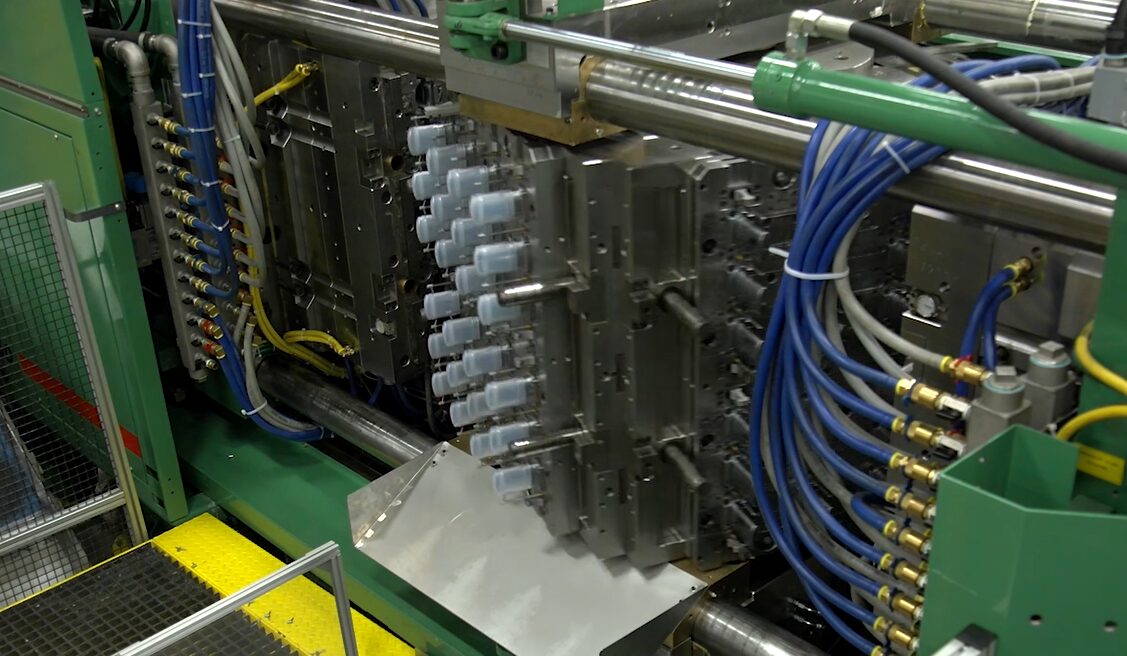
Next, the molten plastic is injected into the mold via a nozzle. A screw or ram mechanism inside the machine forces the plastic into every part of the mold cavity. This occurs under high pressure. The air that previously filled the mold escapes through vents as the plastic replaces it.
3. Let the Molten Plastic Cool
Once the plastic fills the mold, it’s left to cool and harden. Even cooling is crucial to prevent warping or shrinking of the plastic part. The mold is often equipped with cooling channels through which water or other coolants circulate to maintain a consistent temperature.
To cool evenly, the plastic needs to be kept at a specific temperature. The plastic must also remain pressurized so that it doesn’t flow back through the nozzle that inserted it. The cooling time and temperature depend on the type of plastic, design, and thickness, and they significantly affect the overall production cycle time.
4. Remove the Hardened Plastic From the Mold
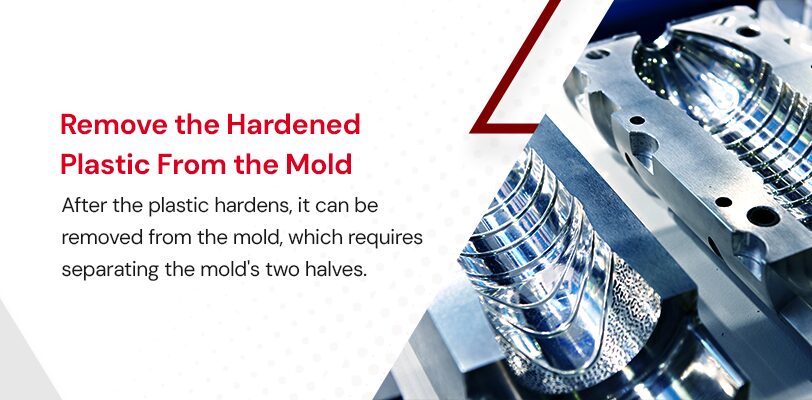
After the plastic hardens, it can be removed from the mold, which requires separating the mold’s two halves. After ejection, the part may require some trimming to remove excess material or finishing to achieve the desired surface quality. Then, the mold is reattached and prepared for the next injection.
What Are the Benefits of Plastic Injection Molding?
Plastic injection molding can be a worthwhile and financially rewarding investment. The main benefits that plastic injection molding can deliver include:
- Production Is Faster and Simpler: Since parts can be mass-produced quickly, production becomes more efficient.
- Less Waste Is Produced: Plastic injection molding creates much less waste than other methods of part manufacturing, such as CNC.
- Complex Parts Can Be Created as One Part: Rather than creating several simpler parts and fitting them together later, plastic injection molding lets you manufacture complex parts with a single mold.
- Quality Stays Consistent: Thanks to the process’s repetitive nature, quality can be reliably maintained over different batches.
- Branding and Identification Is Easy: Branding, identification numbers, and other graphics or text can be incorporated into the mold.
How to Get the Most From Plastic Injection Molding
Plastic injection molding can greatly improve the manufacturing process for many parts, but its success depends on many factors. Here’s how to make plastic injection molding as advantageous as possible for your company.
Use the Right Plastics
There are numerous plastics that can be used for injection molding, each with unique properties. Understanding these properties can help you find the best possible plastic for each specific application.
To find the best plastics in each case, consider:
- How the material reacts to temperature, chemicals, other materials, and air.
- The material’s appearance and whether it’s important to your part.
- Whether the material can withstand production stress.
- Your budget.
Optimize Part Design
While your mold may be able to create the desired part, that doesn’t make it the optimal design. The mold also needs to be designed for manufacturability, which considers the mold’s thickness, the part’s final appearance, and draft angles.
A more optimal design can mean less material wastage, a faster process, and a better end result. This is why the testing process shouldn’t be overlooked.
Find the Right Partner
When companies lack the knowledge or resources to use plastic injection molding, a partner can help with every aspect of the process, including mold design, testing, and manufacturing. Those who specialize in plastic injection molding are likely to have proficient equipment and software that allows them to produce the desired results.
Plastic Packaging Molds That Deliver
Plastic injection molding can drastically improve your manufacturing processes. From lower costs to increased efficiency, injection molding for plastics delivers numerous benefits. Working with a trusted partner can help your company maximize this process.
At The Plastek Group, we specialize in using plastic injection molds to manufacture packaging for various industries. Leaning on almost seven decades of experience, we help businesses get the best possible results from plastic injection molding. Whether involved in the design, creation, or improvement of the mold, we do our part to deliver the ideal final product. We also have the tools and technology to manufacture parts ourselves.
Based in Erie, PA, we also have manufacturing sites in Mexico, Brazil, and the United Kingdom. With skilled, knowledgeable teams at every site, we help businesses around the world benefit from plastic injection molding.
To find out more about our mold design and manufacturing services and how we can help you, contact us today.