


Rigid plastic packaging holds its shape, whether full or empty. When evaluating packaging for a new personal care or food product, one of the first decisions is whether that container should be rigid or flexible.
This guide breaks down what qualifies as rigid plastic, the materials and formats behind it, and the industries that depend on it most, so you can make an informed packaging decision with confidence.
The Definition of Rigid Plastic Packaging
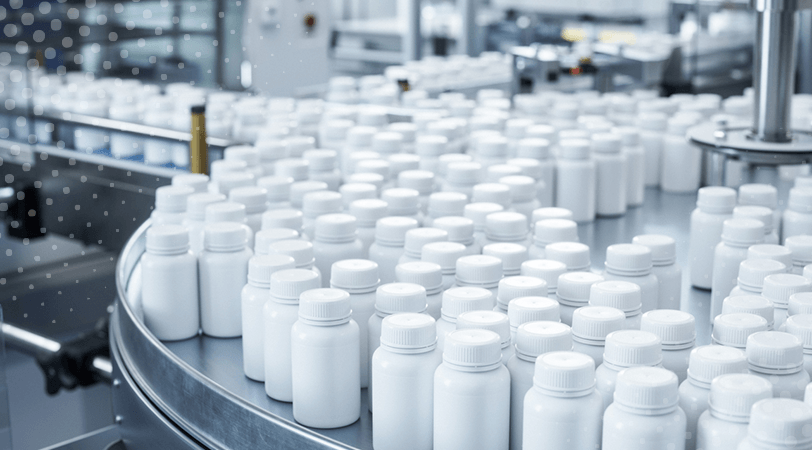
Rigid plastic packaging is a type of packaging designed to hold its shape rather than take the shape of what’s inside it. What makes a package rigid comes down to how it’s molded. Manufacturers engineer these plastics to resist bending, crushing, and other deformation under normal handling conditions, from production through shipping and retail display. This sets rigid formats apart from packaging that collapses without a fixed structure to fall back on.
Most rigid plastic packaging takes shape through processes like injection molding and injection blow molding, which use precision molds to produce consistent, repeatable parts at scale.
Rigid Plastic Packaging Materials
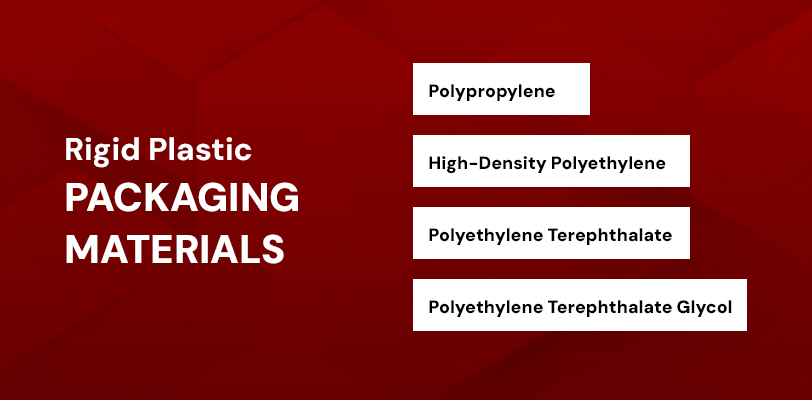
When it comes to selecting rigid packaging materials, four resins serve as reliable starting points, though they represent just one of many options available. Rigid packaging materials include polypropylene, high-density polyethylene, polyethylene terephthalate, and polyethylene terephthalate glycol.
Polypropylene
Polypropylene (PP) offers high resistance to chemicals and moisture, along with strong heat tolerance, durability, and a lightweight profile. Its flexibility under stress makes it well-suited for caps and closures that rely on living hinges to open and close repeatedly without cracking. The U.S. Food and Drug Administration (FDA) recognizes PP as a food-contact substance under federal regulations, making it suitable for use in food and beverage applications.
Its recyclability outlook is also expanding. When the Polypropylene Recycling Coalition launched in 2020, 60% to 65% of U.S. households had access to PP recycling, and by March 2026, 48 million more residents had gained that access.
High-Density Polyethylene
High-Density Polyethylene (HDPE) brings strong chemical and UV resistance, an excellent moisture barrier, and high impact resistance to rigid packaging. It’s a common choice for containers, jars, and closures across personal care, home care, and pharmaceutical applications. HDPE also carries resin identification code 2 and is widely accepted in curbside recycling programs.
Polyethylene Terephthalate
Polyethylene Terephthalate (PET) stands out for its clarity and transparency, giving products a glass-like appearance in a lightweight, impact-resistant package. It also offers a strong barrier against moisture and oxygen, making it a popular choice across personal care, pharmaceutical, and food and beverage packaging. The U.S. Environmental Protection Agency (EPA) reports that PET carries one of the highest recycling rates among common plastics.
Polyethylene Terephthalate Glycol
Polyethylene Terephthalate Glycol (PETG) is a glycol-modified version of PET. That modification limits the crystallization that PET can undergo, a trade-off that produces greater optical clarity and impact resistance along with easier moldability. PETG is especially valued in applications where appearance and product visibility matter most, including cosmetic jars, personal care packaging, and pharmaceutical containers.
Common Rigid Plastic Packaging Formats
Rigid plastic can be manufactured through processes like injection molding into a range of container formats, each suited to specific product types and applications:
- Jars: Jars provide wide-mouth access for creams, balms, and other semi-solid products, making them a go-to format for personal care and cosmetic lines.
- Caps And Closures: Caps and closures seal containers and control dispensing, often incorporating features like living hinges or child-resistant designs.
- Tubes: Tubes offer a squeezable, portable format well-suited to lotions, gels, and other viscous products.
- Containers: Containers cover a broad category of rigid formats designed to hold, protect, and transport products of nearly any size or shape.
Businesses looking for a faster path to market can also explore existing stock product designs, which offer proven rigid plastic packaging formats without the time investment of a fully custom build.
Industries That Rely on Rigid Plastic Packaging
Rigid plastic packaging is the preferred choice across a wide range of industries, particularly where product protection, regulatory compliance, and shelf appeal are nonnegotiable. Industries that rely on rigid plastic packaging include:
- Personal Care Products: Formulas stay protected from contamination in personal care products, which also depend on rigid formats for a premium, shelf-ready look.
- Health And Beauty: Similar durability needs apply to the health and beauty sector, where precise dispensing features matter for creams, serums, and cosmetics.
- Home Care: Concentrated formulas are common in home care products, where rigid packaging offers the structural integrity needed for safe storage and handling.
- Pharmaceutical and Nutraceutical Products: Rigid plastic supports the strict regulatory compliance and tamper resistance required in pharmaceutical and nutraceutical products, a sector projected to be the fastest-growing end user in the rigid plastic packaging market through 2031.
- Food And Beverage: Rigid formats are also essential in food and beverage packaging, with beverages alone accounting for 35.90% of rigid plastic packaging demand in North America.
Frequently Asked Questions About Rigid Plastic Packaging
A few quick answers can clear up any remaining questions about rigid plastic packaging.
What is rigid packaging?
Rigid packaging is any container that holds its fixed shape and structural integrity, whether or not it contains a product. This physical stability, rather than the material itself, is what defines rigidity. A plastic is considered rigid when it’s built to withstand the stresses of normal handling, storage, and transport.
What is an example of a rigid plastic?
Common rigid plastic packaging examples include jars for skin care creams, caps and closures for personal care or food products, tubes for lotions and gels, and containers built for a range of product types. You can also explore ready-made stock product designs to move from concept to shelf faster.
When is rigid plastic packaging the right choice compared with flexible or semi-rigid alternatives?
Rigid plastic packaging is the right choice if your product requires structural protection against crushing, stacking pressure, or heavy distribution stress. Flexible or semi-rigid packaging may be the right choice when you have tight shipping weight limitations, when your product calls for flexibility and visibility, or when you want consumers to be able to reseal your packaging with ease.
Get Started With The Plastek Group
Once rigid plastic packaging is confirmed as the right fit, the next step is finding a manufacturing partner who can bring your vision to life. The Plastek Group has spent nearly seven decades manufacturing rigid plastic packaging for some of the world’s leading Fast-Moving Consumer Goods (FMCG) brands, building on toolmaking roots that still shape our molds today.
As a family-owned and operated business, The Plastek Group brings close attention to detail to every partnership. Our full-service team handles custom product design and development, injection molding, and manufacturing, among other capabilities available to customers. Ready to explore what’s possible? Request a quote and start the conversation with an innovator in plastic.