


In a 2024 survey, 64% of Britons said they are willing to pay up to 10% more for sustainable packaging. This shift in consumer sentiment has become a market imperative and a complex challenge for UK businesses. How do you balance the urgent demand for sustainability with the rigorous performance requirements of injection moulding?
Injection moulding is a high-volume process that forces molten plastic into moulds to create identical, complex parts like car components, bottles, or electronics. The sheer amount of eco-friendly materials, new government regulations, and evolving infrastructure can feel overwhelming. You must understand your options if turning this challenge into a competitive advantage is your goal.
This guide examines the regulatory drivers influencing the UK packaging market, the materials and design strategies transforming injection moulding, and how to choose the most suitable sustainable approach for your industry sector.
UK Sustainability Regulations and Trends
In the UK, government legislation, industry-wide initiatives, and consumer purchasing power create pressure to adopt sustainable packaging solutions. Understanding these drivers is essential for any business looking to remain compliant and competitive.
Plastic Packaging Tax
Introduced to encourage the use of recycled materials, the Plastic Packaging Tax has changed the economics of manufacturing. The tax applies to plastic packaging manufactured in, or imported into, the UK that contains less than 30% recycled plastic. For UK businesses, integrating post-consumer recycled content is a financial necessity to avoid incurring additional costs.
The UK Plastics Pact
Voluntary initiatives like The UK Plastics Pact are setting ambitious industry standards. This pact brings together businesses from across the entire plastics value chain with a shared set of targets, including eliminating problematic single-use plastics and ensuring that 100% of plastic packaging is reusable, recyclable, or compostable.
Consumer Demands
Data indicates that shoppers actively seek brands that prioritize sustainability, often favoring products with specific eco-friendly credentials. This trend extends to the medical and pharmaceutical sectors, where health providers increasingly scrutinize the environmental footprint of the products they use.
Extended Producer Responsibility
Extended producer responsibility shifts the cost of managing packaging waste from local authorities to the businesses that produce or import it. This tax applies to all packaging materials by weight, with rates varying by material type.
The financial impact is significant. UK businesses pay based on the total tonnage of packaging they place on the market, creating a direct incentive to reduce weight and switch to lighter materials. This regulation reinforces lightweighting strategies and careful material selection. Even modest weight reductions across high-volume production translate to substantial annual savings.
EU Packaging and Packaging Waste
EU packaging waste regulations remain relevant for UK businesses supplying products to European markets. These regulations set mandatory recycling targets, restrict specific substances, and impose design requirements to improve recyclability across member states.
Updates include stricter requirements for recyclability and limitations on packaging formats that create sorting difficulties. Manufacturers are redesigning components like closures and caps to meet these standards, ensuring market access while future-proofing their designs against tightening requirements. This strategy reduces complexity in multimarket supply chains and positions your packaging portfolio to meet the most stringent requirements across your distribution footprint.
Sustainable Materials for Injection Moulding
Transitioning to sustainable packaging does not mean sacrificing quality or performance. Companies that use injection moulding can take advantage of several solutions to reduce their environmental impact while maintaining the high standards required for caps, closures, and containers.
Post-Consumer Recycled Content
The most direct way to meet the requirements of the Plastic Packaging Tax and support the circular economy is by using post-consumer recycled resin. PCR is plastic consumers have already used. Specialized companies collect it, clean it, and reprocess it into pellets for new manufacturing.
Using PCR diverts waste from landfills and reduces the demand for virgin fossil-fuel-based plastics. High-density polyethylene and polypropylene are two injection moulding materials that have established recycling streams in the UK. Using these materials closes the loop, turning yesterday’s water bottle or yoghurt cup into today’s new product.
While PCR is an effective and sustainable packaging solution for UK businesses, it requires expertise to implement effectively. Colour consistency is a common concern, since recycled feedstock can vary slightly in hue. However, an experienced manufacturing partner can manage these variations or help you select darker colours where minor variances will be less visible.
Sourcing high-quality PCR that meets safety and strength requirements is also critical, emphasizing the need for a supplier with a robust supply chain.
Lightweighting and Product Redesign
Sustainability is not only about choosing different materials. It is also about using less. Lightweighting involves redesigning a product to reduce its weight without compromising its structural integrity or functionality.
Manufacturers can identify opportunities to reduce material thickness through advanced engineering and mould flow analysis. For example, they might redesign a standard bottle cap to shave off a fraction of a gram. While this may seem negligible on a small scale, the impact is massive when spread across millions of units. scale, the impact is massive when spread across millions of units.
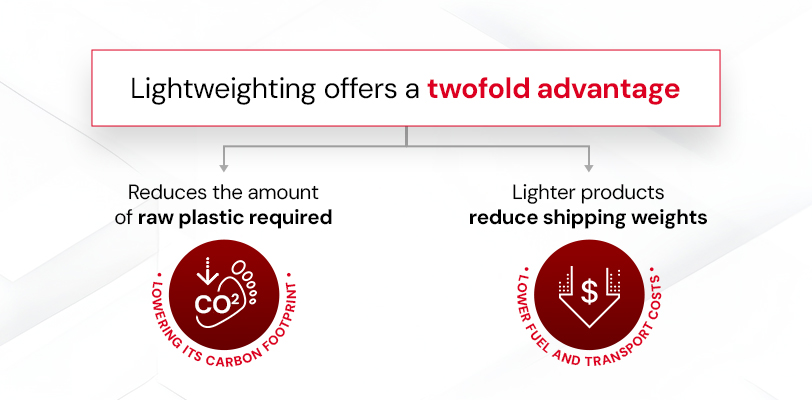
Lightweighting offers a twofold advantage. First, it reduces the amount of raw plastic required for production, lowering its carbon footprint. Second, lighter products reduce shipping weights, leading to lower fuel consumption and transportation costs. This approach demonstrates that sustainable choices often align with cost efficiencies.
Bioplastics
Bioplastics include materials that are either biodegradable or made from renewable resources like corn or sugarcane. While they represent an exciting frontier in material science, they currently face infrastructure challenges in the UK.
Not all bioplastics are compatible with standard recycling streams. For instance, some compostable plastics can contaminate the recycling stream for standard polyethylene terephthalate or HDPE if not sorted correctly. While they may be appropriate for specific niche applications, UK businesses must carefully evaluate the end-of-life infrastructure available to their consumers before fully committing to this path.
For many high-volume applications, PCR remains the more immediate and scalable solution within the UK’s current recycling ecosystem.
Choosing the Appropriate Solution for Your Sector
There is no ‘one-size-fits-all’ approach to sustainable packaging. The best sustainable packaging solutions depend on the products you need to protect, the regulatory environment in which you operate, and the expectations of your specific customer base.
Grocery, Personal, and Home Care
Packaging in the fast-moving consumer goods sector must be robust, visually appealing, and often food-safe. Consider the following.
- Durability: Tubs, lids, and scoops must withstand the rigors of transit and daily use. PCR performs exceptionally well, offering the necessary strength for items like laundry detergent scoops or shampoo flip-top caps.
- Food safety: Material safety is crucial for the food and beverage industry. While food-grade PCR availability is improving, many brands opt for a hybrid approach, using virgin material for food-contact surfaces and PCR for outer layers or non-contact components like lids.
- Consumer perception: Visible eco-labeling and the use of familiar recycled materials can significantly boost brand preference on the shelf.
Pharmaceutical and Medical Devices
The pharmaceutical and medical sectors face a stricter set of challenges, which include:
- Regulatory compliance: Packaging for medicines and devices must meet rigorous International Organization for Standardization standards and often requires manufacturing in clean-room environments. Changing materials in this sector involves complex validation processes.
- Patient safety: Protection is the primary function of medical packaging. A tamper-evident closure or a sterile device component cannot fail.
- Path forward: Due to the challenges of PCR contamination, lightweighting is an effective strategy for this sector. Mass-balance approaches, which use accounting to attribute sustainable feedstocks to final products, provide a means to incorporate sustainability into regulated supply chains without altering polymer properties.
Partner With Plastek for Sustainable Solutions
Implementing these sustainable solutions requires a partnership with a manufacturer that understands the nuances of design, material science, and UK regulations.
When exploring sustainable packaging solutions in the UK, look for a provider with package design and development capabilities to guide you through the entire process, from optimizing a design for lightweighting to testing PCR formulations. Supply chain security is also vital. As demand for high-quality PCR increases, your partner must have established relationships with reliable reclaimers to ensure a consistent supply of material that meets the 30% threshold for tax exemption.
The shift towards sustainable packaging in the UK is accelerating. Businesses that use injection moulding should embrace solutions like post-consumer materials and strategic lightweighting to reduce their environmental impact, ensure regulatory compliance, and align their brands with modern consumer values.
Sustainability is an opportunity to innovate and lead in your market. Expertise makes all the difference, whether you are looking to redesign a closure for weight reduction or transition a product line to recycled content. Are you ready to learn more about the future of packaging in the UK? Contact our team of dedicated UK and European specialists to discuss a sustainable solution tailored to your products and goals.